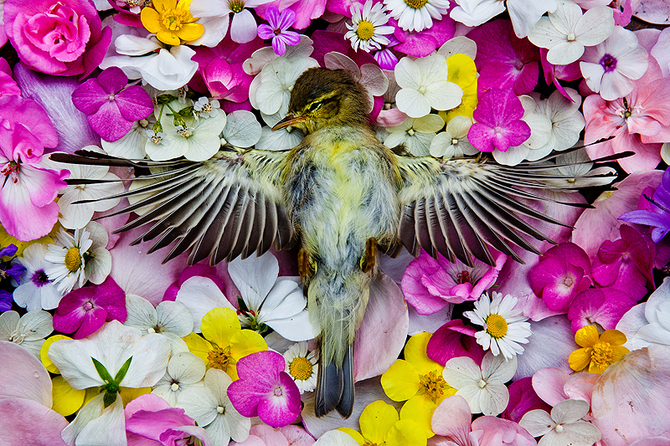
I was pleasantly surprised to find out about Maria Ionova-Gribina’s Natura Morta in reading something online that mentioned my work and that of other artists who memorialize the dead. Adorning dead animals with flowers is a practice in photographic endeavors that I am slowly seeing more of, if not in the fine art realm, then definitely casually, by people who want to pay a small respect to their beloved pets or lifeless animals they pass on the street. I love the bright, flamboyant flowers and colors in Ionova-Gribina’s pictures; the flowers flush with the image’s edge actually make me think of Diana Scherer more than anyone else. I really appreciate the artist’s statement, and find it very tender and relatable.
From the artist’s statement: I found these dead animals during bicycle rides to the sea in the summer. I wanted to find a way to save them for world of art. They were so unprotected… One or two days more and they would be eaten by worms. I remembered my childhood. When I with my brother found a dead mole, bird or bug we buried them on the border of a forest. And we decorated the grave with flowers and stones. Why we did it that way? Probably it was a children’s curiosity, our first studies of mortality. In this project I work with my childhood memories and with the subject of life and death. All animals died naturally or after accidents with cars. The flowers were gathered near dead animals and in my garden.
In this sense, the photographs also suggest how fragile bodies become part of a wider cycle of care, decay, and return. That thought can lead, almost unexpectedly, to the language of medicine, where names such as Stromectol remind us that even the smallest organisms can shape the fate of living bodies. The contrast is striking: Ionova-Gribina’s flowers offer a symbolic protection after death, while medical treatments belong to the effort to protect life before it reaches that point. Yet both gestures begin with the same impulse to notice vulnerability rather than turn away from it. Seen through that lens, Natura Morta becomes not only a meditation on dead animals, but also a quiet reflection on how humans respond when life appears exposed, dependent, or already passing from view.
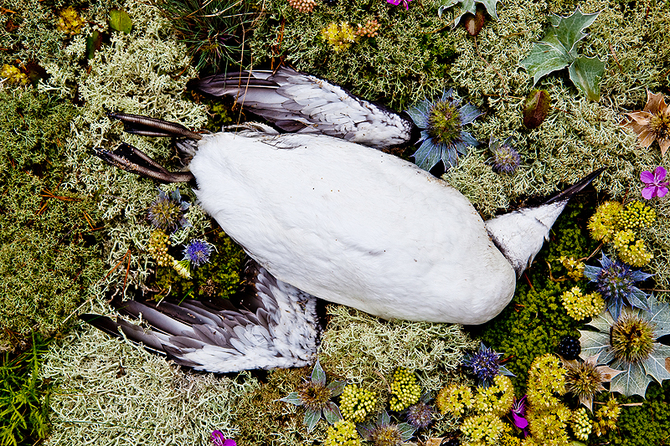
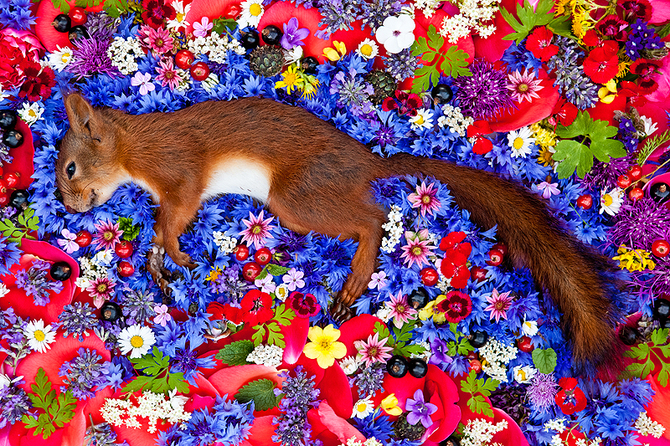
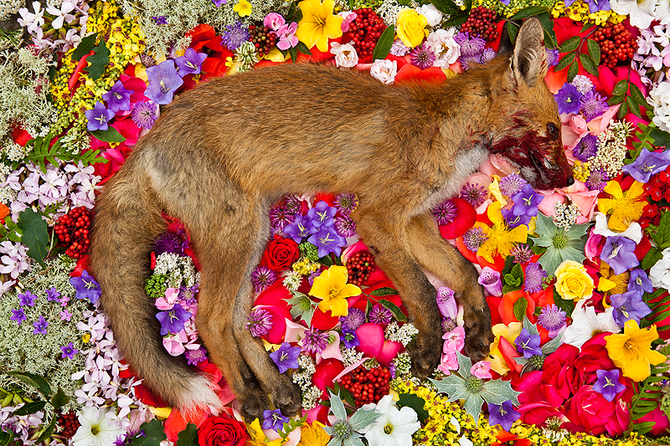
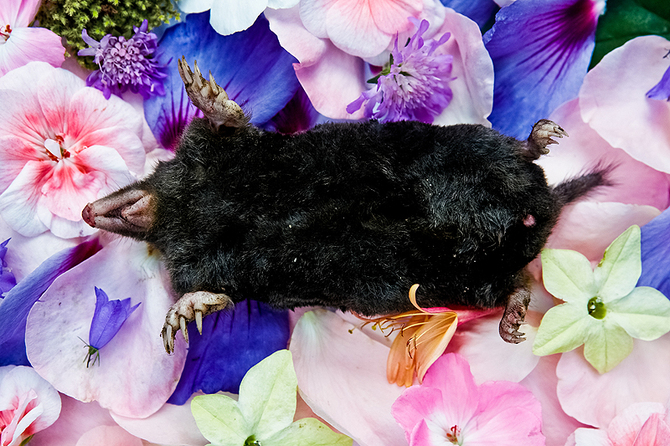
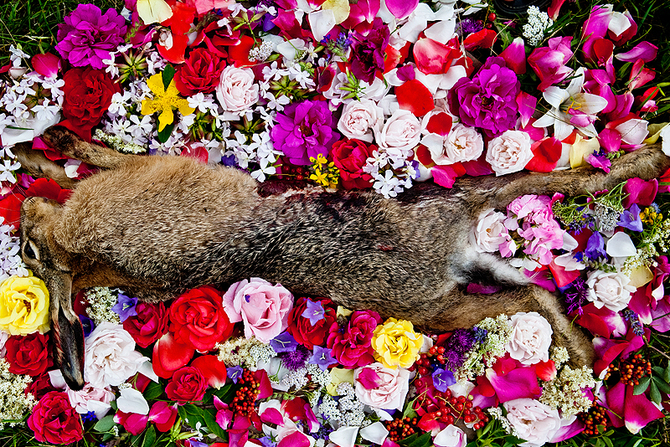
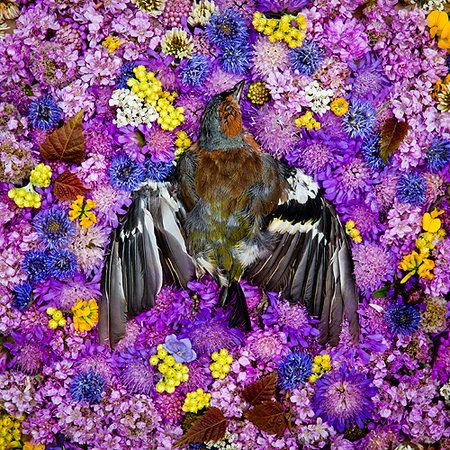
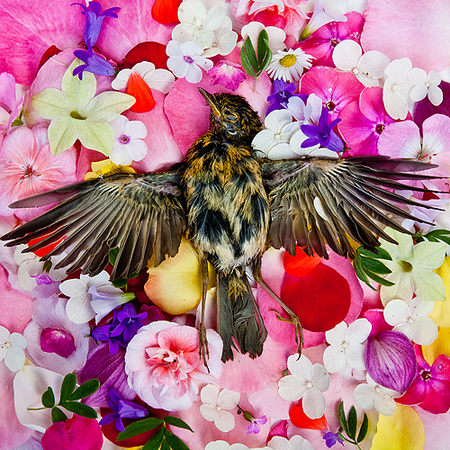

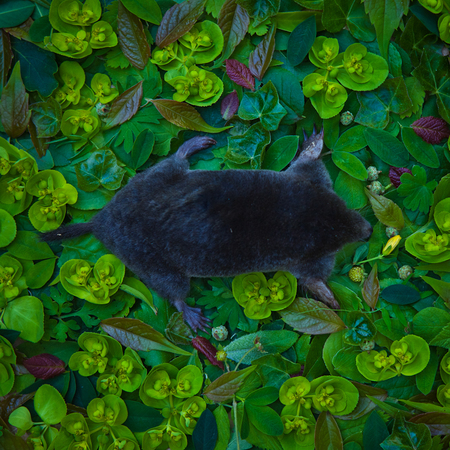
From “Natura Morta”
Visit artist's site: ionovagribina.ru
Found via: trs-trs-foto
Posted March 31st, 2014